Faulty O-Ring Caused $5.5M Engine Room Fire On Bulk Carrier Lem Verbena, NTSB Finds
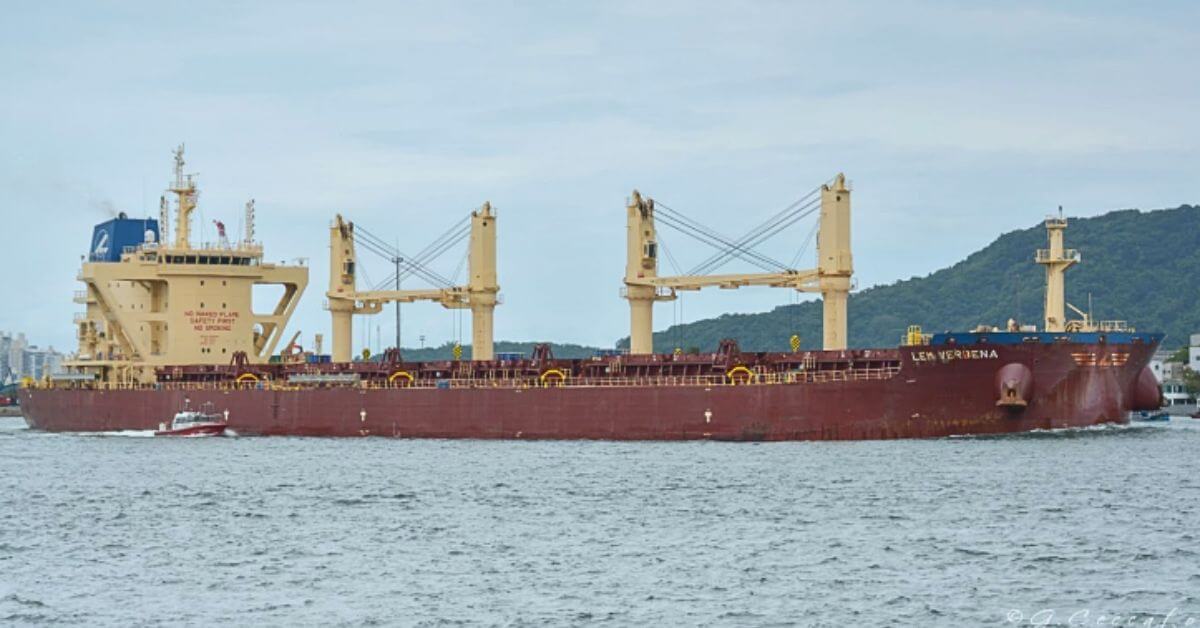
The National Transportation Safety Board (NTSB) has found that a failed O-ring seal caused an engine room fire on board the bulk carrier Lem Verbena in January 2025.
The fire broke out late on January 4 while the 199.9-metre vessel was docked at the Alabama State Docks on the Mobile River during cargo operations. There were 19 crew members on board. No injuries or pollution were reported, but the damage to the vessel was estimated at $5.5 million.
The incident started at around 23:22–23:23 in the upper engine room near the composite boiler burner unit, shortly after the burner had completed a normal cycle. A fire alarm sounded in the engine control room, and the second engineer saw burning fuel dropping from the upper deck. The flames then spread to lower platforms in the engine room.
The vessel’s water mist system started automatically, but the fire continued to grow. Crew members tried to enter the engine room wearing firefighting gear but had to retreat because of heat and smoke.
The crew then shut down the fuel systems, secured engine room ventilation, and gathered all personnel. Boundary cooling was started, and the master ordered the release of the fixed carbon dioxide (CO₂) fire extinguishing system. The engine room was sealed to keep the CO₂ inside. After the system was released, smoke from the exhaust stack reduced, showing the fire was being controlled.
The master also informed the Mobile Fire-Rescue Department, whose team arrived on board at about 23:50. Firefighters waited to allow the CO₂ to work before entering the engine room. The fire was confirmed fully extinguished at 00:37 on January 5.
After the incident, investigators found that the fire started near the fuel flow meter on the boiler burner unit. An O-ring seal in the oil fittings block had been pinched between two misaligned fuel port modules. Because of this, the seal could not sit properly, and over time it became damaged and failed.
This allowed pressurised diesel fuel, at around 43 psi, to leak out. The fuel likely turned into a fine spray and caught fire on a nearby hot surface in the engine room.
Investigators also found a partially stripped bolt that meant the burner unit was not tightly secured. In addition, a software configuration error in the system’s SD card kept the fuel pump running even when the burner was not in use. This kept the system under constant pressure, which made the damaged O-ring wear out faster and increased the fuel leak.
The investigation found that these issues together led to the fire. While the exact ignition source could not be confirmed, it was likely a hot surface near the boiler or exhaust system.
The NTSB said all scheduled maintenance on the boiler had been completed before the incident.
The crew’s actions, including shutting down systems, sealing the engine room, and using the CO₂ system, helped bring the fire under control and prevented injuries.
Reference: NTSB
Want to read more?
Check out the full article on the original site