Mālama Hawaiʻi: Help Hawai‘i Island’s Wetland Birds and Shorebirds
Our take
The beauty of Hawai‘i Island extends far beyond its stunning landscapes and vibrant culture. The Keaukaha area, known for its picturesque lava rock beaches and breathtaking sunrises, is a microcosm of the rich ecological and historical tapestry that defines the island. This coastal shoreline, with its unique access to both the ocean and freshwater springs, is not only a popular gathering place for residents—who fish, swim, and celebrate life’s milestones—but also a crucial habitat for wetland birds and shorebirds. As highlighted in the article “Mālama Hawaiʻi: Help Hawai‘i Island’s Wetland Birds and Shorebirds,” the preservation of these habitats is vital for maintaining the island's ecological integrity and cultural significance.
Historically, Keaukaha was once home to one of the island's most prolific coastal wetlands, a sanctuary that played a critical role in the lives of native Hawaiians. This area has been a gathering space for generations, fostering a strong sense of community and cultural identity. The transformation of the landscape over time, particularly with the expansion of Kalaniana‘ole Street to Richardson Ocean Park, underscores the delicate balance between development and conservation. As we witness changes in our environment, it is imperative to reflect on how these shifts impact not only local wildlife but also the cultural practices and traditions that have thrived in harmony with nature for centuries. This is a topic worth exploring further, especially in light of other ongoing local developments, such as the open house scheduled May 27 for Kekaha Landfill Cell 3 project, which may have implications for our natural landscapes.
Moreover, the plight of Hawaii’s native birds is an issue that resonates with environmental enthusiasts and casual visitors alike. Engaging with initiatives like Mālama Hawaiʻi not only fosters a connection to the land but also empowers individuals to contribute to conservation efforts. By participating in these initiatives, visitors can take part in the larger narrative of stewardship, ensuring that future generations can also discover and indulge in Hawaii's unparalleled beauty. The call to action is clear: we must embrace our role as caretakers of this paradise, blending adventure with responsibility, and sophistication with authenticity.
As we look to the future, we must ask ourselves how we can balance the allure of tourism with the need for sustainable practices. The island's charm lies in its unique ability to offer both relaxation and adventure, yet this must be accompanied by a commitment to preserving its delicate ecosystems. In a world where environmental concerns often clash with development desires, how can we ensure that the spirit of Aloha continues to thrive? It calls for a collective effort from both locals and visitors, a commitment to exploring, discovering, and ultimately protecting the vibrant culture and natural beauty that make Hawai‘i Island such a remarkable destination.
At Hanalei Bay Country Club, we believe in blending luxury with authenticity, supporting initiatives that enrich our community and environment. As we continue to celebrate the treasures of our island, let us remember that true adventure goes hand in hand with responsibility. The question remains: how will you choose to engage with the beauty and culture of Hawai‘i Island during your next visit?
Most visitors to Hawai‘i Island know the Keaukaha area for its beautiful lava rock beaches, its spectacular sunrise views, and the bustling Port of Hilo. It’s no surprise that this coastal shoreline, with access not only to the ocean but also an abundance of freshwater springs, holds significant cultural and historical value.
Today, Keaukaha is a common gathering place for residents to fish, swim and celebrate special occasions. But before Kalaniana‘ole Street stretched all the way down to Richardson Ocean Park, Keaukaha was home to one of the island’s most prolific coastal wetlands.
The Lokowaka Pond Complex is one of the only coastal wetland areas on the Big Island. Before this stretch was developed, native wetlands and estuaries, as well as loko i‘a (traditional Hawaiian fishponds), flourished. Due to development and infill, the pond complex has now been reduced down to 51 acres, much of it covered in invasive California grass (Urochloa mutica) and other non-native trees and plants. The rapid growth of these plants (as well as tilapia, koi and other invasive fish in the pond) has left this unique ecosystem out of balance and devoid of much of the life that once thrived here. For endemic shorebirds like ‘alae ke‘oke‘o (Hawaiian coot) and the nēnē goose, the area was no longer hospitable for hunting and breeding, and they effectively abandoned it.
In the early days of the pandemic, husband-and-wife team Kumiko and Patrick Mattison found themselves without any customers for their tour guide business, which focused on birds and nature walks. The Mattisons used the opportunity to move forward with an idea: They wanted to start an organization to support shorebirds on the east side of the island, an idea that came to them when they realized they hadn’t seen the ae‘o (Hawaiian stilt) land in the pond in more than 15 years. The ae‘o had been seen on private property elsewhere on the east side but didn’t have a place to land and forage at the pond. They would fly over it and keep going. Thus began the monumental task of trying to bring back the Hawaiian stilt to Lokawaka.
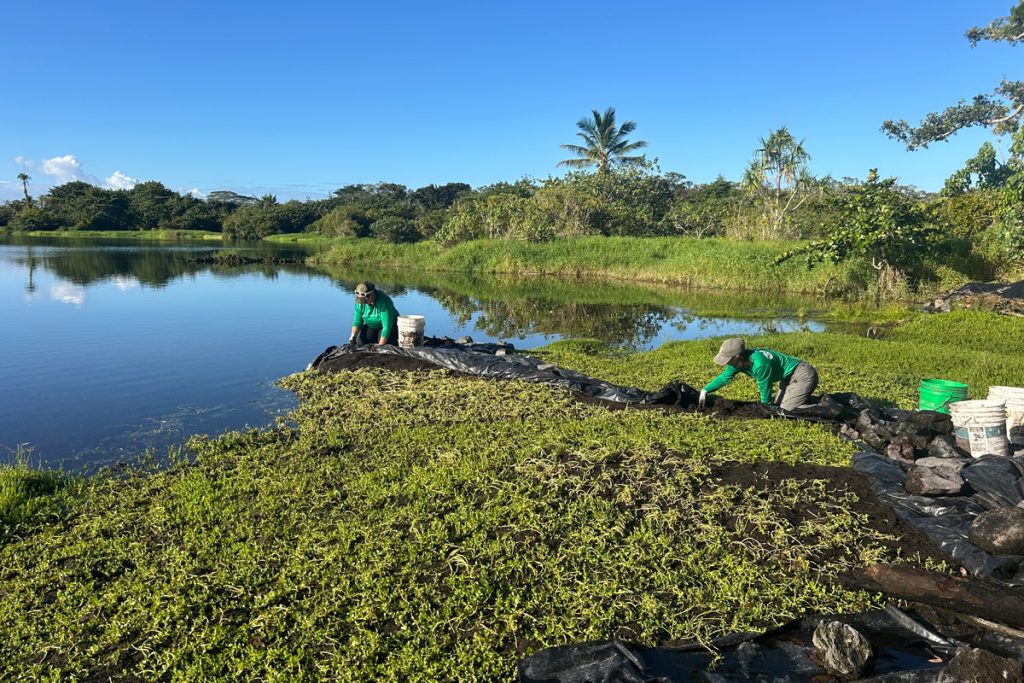
Since launching ‘Āina Ho‘ōla (“land in the process of healing”) Initiative in 2021, volunteers logged countless hours working to restore the pond complex. The impact of their work can already be seen by anyone cruising past the pond. Nēnē quickly returned to the area, and the organization worked with DLNR to have two nēnē crossing signs, a lowered speed limit, and speed tables installed.
Photo: Courtesy of ‘Āina Ho‘ōla Initiative
Inside the pond, manual restoration work has uncovered the rock walls and other infrastructure. A channel that runs parallel to the road has been restored (along with other channels throughout the pond), and life has returned to this once-dry area. Native plants, including nanea (Vigna marina) and ‘ae‘ae (Bacopa monnieri) can be seen from the road thanks to volunteers who are slowly replacing what doesn’t belong in this ecosystem with the native plants that do.
Unlike other areas in Hawai‘i, the island of Hawai‘i does not have a refuge area dedicated to wetland environment preservation and education. The ‘Āina Ho‘ōla Initiative hopes to eventually turn the pond complex into an official bird sanctuary and educational area—but there’s still a long way to go before that can happen. That’s where volunteers, both visitors and residents, are needed.
Volunteer days are typically held at least once per week, usually on the weekends. Volunteers can park at Kealoha Beach Park, adjacent to Carlsmith Beach Park, one of the most popular swimming and snorkeling spots in Hilo. It’s the perfect place to start the day: After a few hours in the mud, these spring-fed waters are a great place to relax. Volunteers gather in the morning, promptly at 9 a.m., and then finish up right around noon. The majority of the work focuses on removing California grass, cleaning up trash and planting native species.
Volunteers can expect to spend a few hours in a muddy, uneven, wet environment, and should dress appropriately. Suggested clothing includes lightweight, quick-drying long-sleeved shirt and pants; a hat; sunglasses; and closed-toed shoes like reef shoes or tabis (no slippers, Crocs or sandals). Volunteers also need to bring reef-safe sunscreen and filled water bottles.
For more information and to volunteer with ‘Āina Ho‘ōla or to learn more, visit ainahoola.org.
This story was originally published in our FALL/WINTER 2025 issue, which you can buy here. Better yet, subscribe and get HAWAIʻI Magazine delivered to right to your mailbox.
Laurie Lyons-Makaimoku is a contributor to HAWAIʻI Magazine.
Read on the original site
Open the publisher's page for the full experience