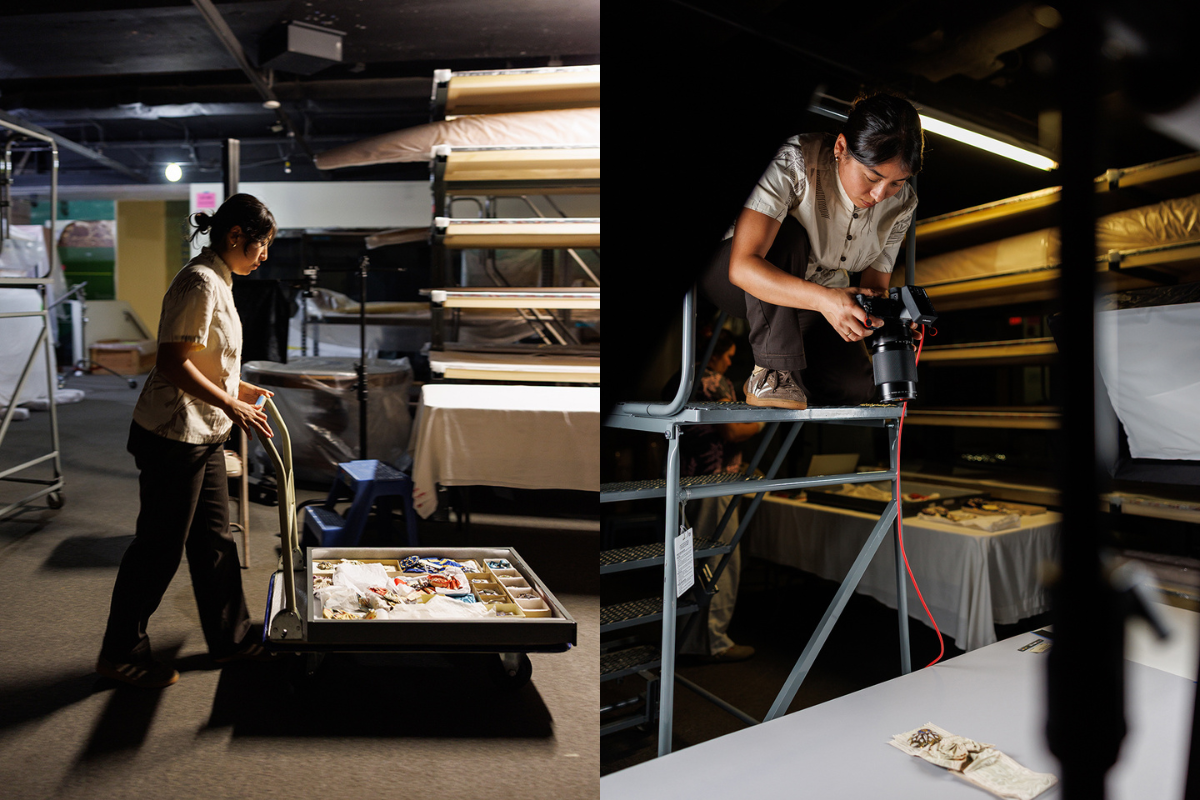
There's something quietly revolutionary about the way Noel Kenny moves through Bishop Museum's halls, pull cart in tow, building pop-up studios in hallways and coaxing stories out of 20-foot canoes and 19th-century archival prints. We think her work is a masterclass in what it means to honor a place without performing reverence, no grand gestures, just a steady, respectful click of the shutter. For our readers, who crave authentic connections to the places they explore, Kenny's approach offers a tangible lesson: the most meaningful encounters with culture often come from the quietest, most intentional acts of preservation.
Kenny isn't just digitizing artifacts; she's creating access. She spends time with curators before taking a single photo, learning how each object will be used, what the "front" of an artifact means, and how lighting can bring out texture without distorting truth. That collaborative, unhurried rhythm is something we can all borrow from, whether you're Savor Waikiki's coastal flavors and discover your next island bite or stepping into a museum gallery for the first time. The same spirit of curiosity and respect transforms a simple meal or a photograph into something lasting. And when you consider that Kenny's images will one day travel far beyond O'ahu, reaching audiences who may never set foot in the Bishop Museum, her work becomes a kind of invitation, much like the cinematic journeys we've seen unfold on Kaua'i, where adventure is Discovering adventure: a $1.8 million cinematic journey through Kauaʻi's wild heart and the landscape itself becomes a story worth telling.
What strikes us most is Kenny's humility about the future. She says the photos she takes today will play roles "beyond my imagination," and she hopes they'll inspire people in Hawai'i and beyond to connect more deeply with their culture. That's not a throwaway line, it's the core of what makes this work so vital. In a world that often rushes to commodify heritage, Kenny chooses patience. She treats each object as a living conversation, not a static relic. The result is a digital archive that feels less like a catalog and more like a community resource, open to anyone with curiosity and an internet connection.
Here's the concrete takeaway: next time you visit a museum or a cultural site, slow down. Ask the question nobody asks, what's the "front" of that artifact? Who decided it should face this way? That small shift in perspective is exactly what Kenny brings to her work every day. And if you're looking for a way to experience that same depth of connection from home, keep an eye on the Bishop Museum's digital collections as they grow. The images Kenny is making now will be the ones that shape how we see Hawai'i's history for generations, frame by frame, with no filter, and all the respect in the world.